
Goddess Page
The Ley Line Group visits Utrecht
at
Home2b.nl

The Ley Line Group
visits Utrecht, the Netherlands
The Ley Line Group has been
visiting
the ancient city of Utrecht,
Netherlands.
Utrecht originates from a
Roman Empire Castellum
in an ancient curve of the
river Rhine.
After the Roman Castellum came
the Franks, the Frisians,
the Irish monk-missionaries,
the Merovingians,
the Vikings, the Bourgondians
and at last the Netherlands.
The center of the city where the
Group went to is called the Domplein.
Here was the Roman castellum,
the Frankish church of Saint Maarten,
the Cathedral of Willibrord,
the castle of the bishops,
the castle of the
Bourgondians, the gothic cathedral builders,
the Reformation, and at last the
frugal municipality bureaucracy.
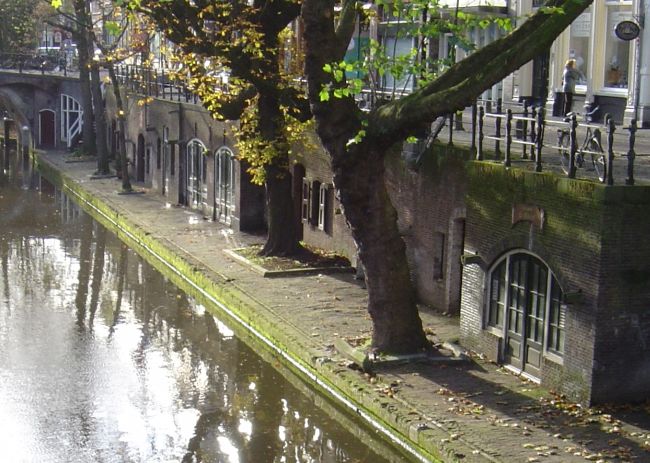
Utrecht has
characteristic medieval canal cellars
causing a lot of
atmosphere along the canals.
Many restaurants
and some little shops are established in the cellars.
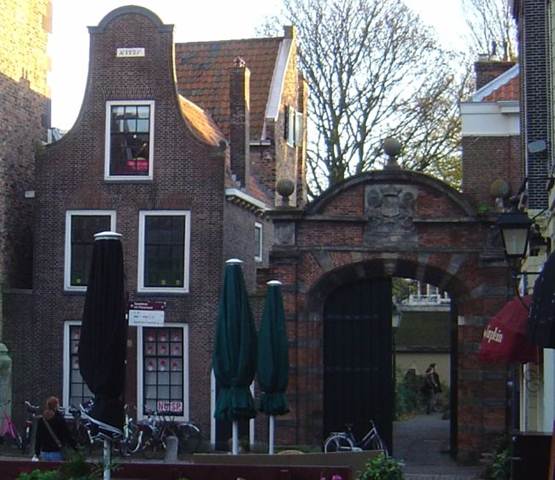
The entrance to
the now vanished medieval bishops castle was behind
the ancient
gateway. Now there is an useless garden filled with grass.
In this garden
the group could measure the location of the
powerful Ley
Line Centre of the Salvatorcathedral
inside the adjacent garage shack (just visible
through the door).
The Salvatorcathedral built by
Saint Willibrord has been destroyed
to make place for houses, a
garage shack and a road.
Thanks to the garden the Group
could do measurements and have visions,
because the Ley Line Center of
the former Salvatorcathedral
is covered by a garage-shack and
a row of houses.
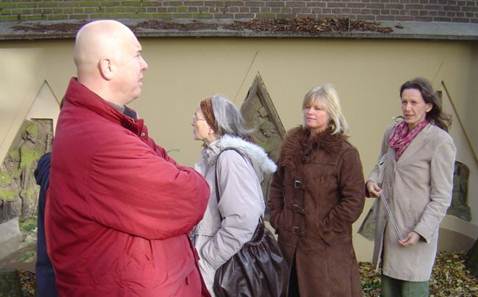
Some group
members in action,
trying to
measure the exact location of the main axis of the
Salvator
cathedral and the Ley Line Center.
The Ley Line
Center is very powerful in existence and clearly measurable.

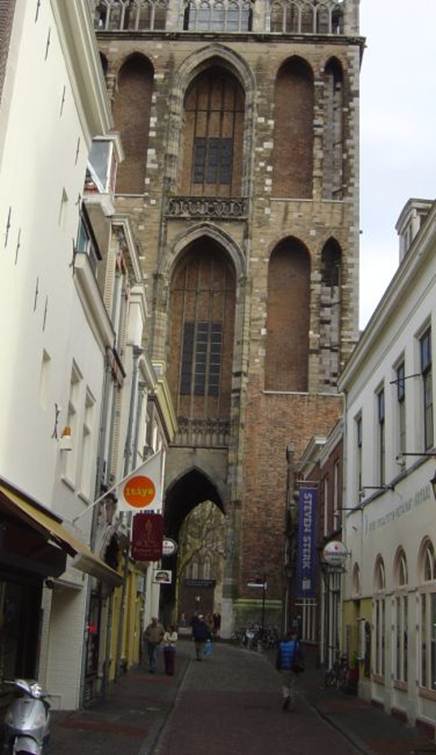
The Domtower is
standing out of line with the main axis of
the now vanished
castellum.
At the time of
construction of the Domtower
the wall and
gates of the Roman castellum were still in existence and visible.
This street
towards the Domtower is in line with
the main axis of
the castellum and the Domtower stands visibly at an angle.
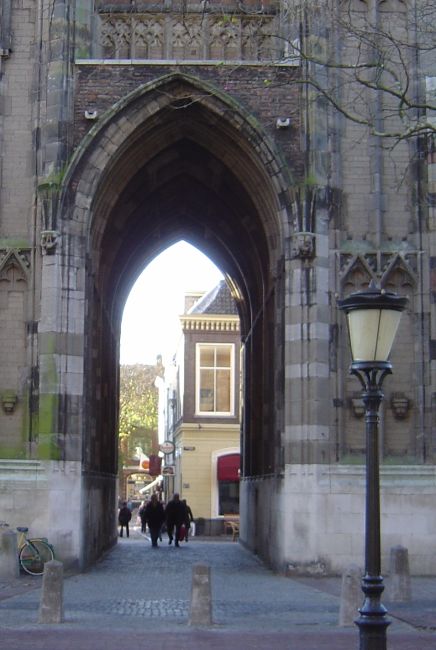
The other side of the
Domtower.
The gate through the Domtower
is a cold and chilly place.
So is the part of the Domplein
between the Domtower
and the Domchurch. It was not possible
for the old cathedralbuilders
to construct an everlasting
cathedral. The middle part blew away in 1674AD.
The orientation out of line
with the castellum could be the cause
of the somehow unpleasant
feeling of the Domplein.
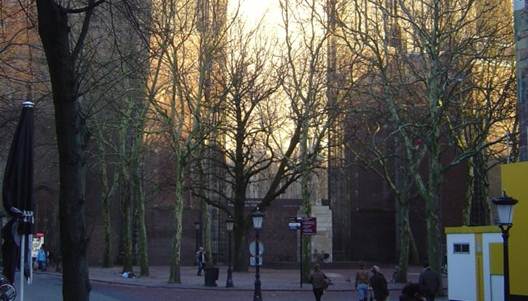
This is the Domplein with the
gap between the Domchurch and the Domtower.
Heavy earth forces are playing
here with the elements of the weather.
The sacred center of the
castellum was here,
also the Ley Lines upon which
the Domchurch is centered
and the North-South and
West-East axis of the castellum too.
Also the temple of the
castellum was on this place.
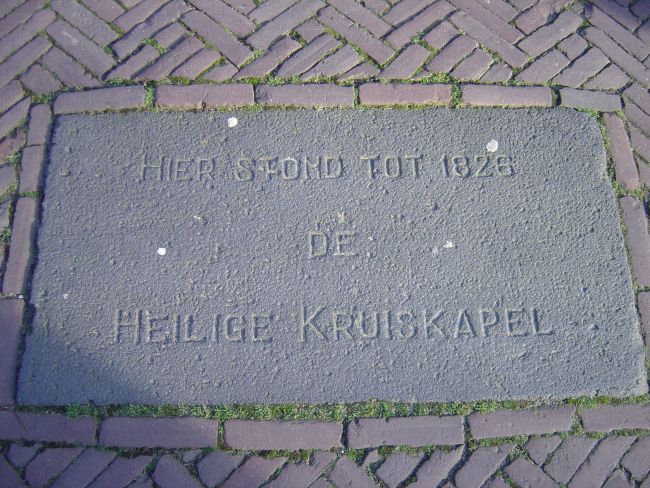
Here stood until 1826
the Holy Cross chapel
The Franks constructed a small
chapel next to the crossroads of the castellum,
in the heart of the old
settlement.
The chapel was dedicated to
Saint Martin, the French saint, friend of the poor.
The day of Saint Maarten is
even today celebrated by kids with lanterns
going from door to door
singing their Saint Maarten song.
In 1826AD this ancient chapel
was destroyed,
maybe the oldest Christian
building north of Maastricht.
The disturbance of the place
was to big to have visions
or Ley-line measurements of
the small chapel.
The only comparable building
we know of is the Saint Nicolas chapel
in Nijmegen, which is of a
much later date, but almost the same size.
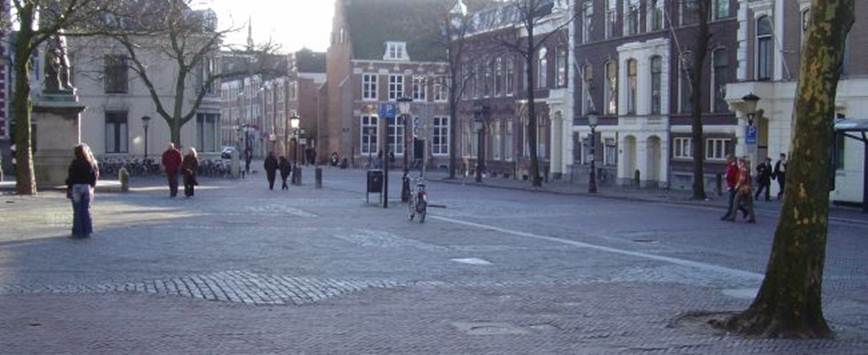
In the pavement
of the Domplein the contours of the ancient
Saint Martin
chapel are made visible.
The bike is standing in the
middle of the old chapel.
Between the garbage can and
the monument are visible the contours
of the destroyed
Salvatorcathedral, once the center
of the veneration of the Lady
in the Cellar.
Also in Chartres we found a
veneration of the Lady in the Cellar.
In Chartres the Lady is a Black
Madonna.
See
the special page on the Black Madonna in Chartres, France.
Here in Utrecht the closed cellar
is very measurable,
so we concluded that the
cellar of the Salvator cathedral is still there.
We don't know whether the Lady
is still in those closed cellar.
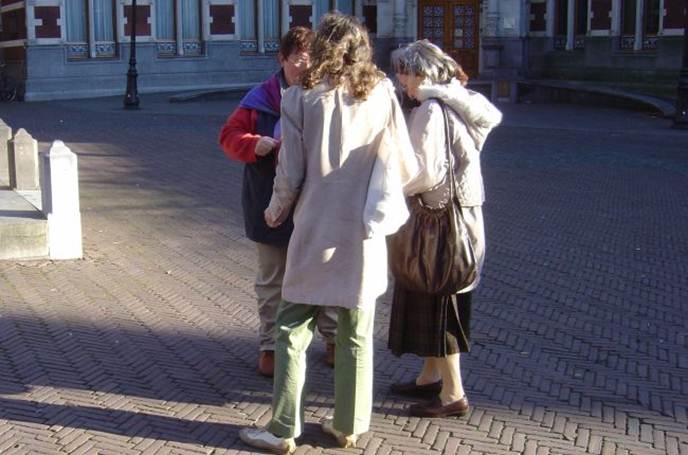
Members of the Group are
standing exactly on the place where
a positive energy has been
noticed. Probably this was also the place
of the Lady in the Cellar.
This miracle statue was very
probably a remnant of the ancient religion
kept in place by the Irish
monk-missionaries to inculturate
Christianity into the old
society.
Although the Salvatorcathedral
has been destroyed, it seems that the
ancient cellar still exists.
Anyway the positive energies
are still there.
Next to the destruction of the
cathedral this spot is also
disturbed by some monument to
honor some forgotten nobility of Utrecht.
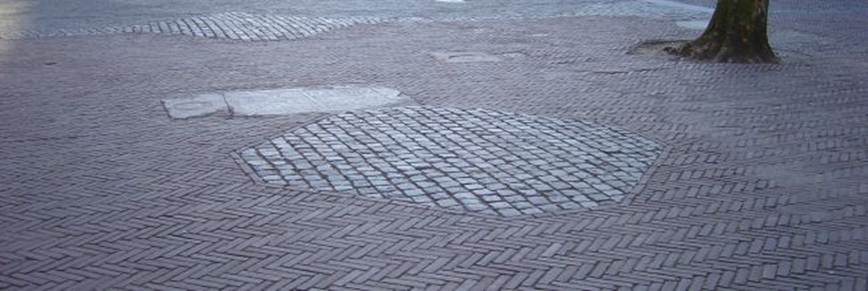
The middle part of the
Domcathedral, now called Domchurch,
blew away in the year 1674AD
and was never rebuild.
That is how the exact place of
the sacred middle point of the castellum
became visible again.
It is not indicated in the
pavement,
most probably because it is
not Christian enough.
Left of the gravestone the
Group measured clearly
deathlines 2.0 and the
powerfull North-South line upon which
the Roman castellum was
centered.
The presence of the Roman
temple was not exact measurable.
The place is very disturbed
and neglected,
so it will need more precise
measurements.
Inside the Dom church we felt
the presence of a Jupiter Temple.
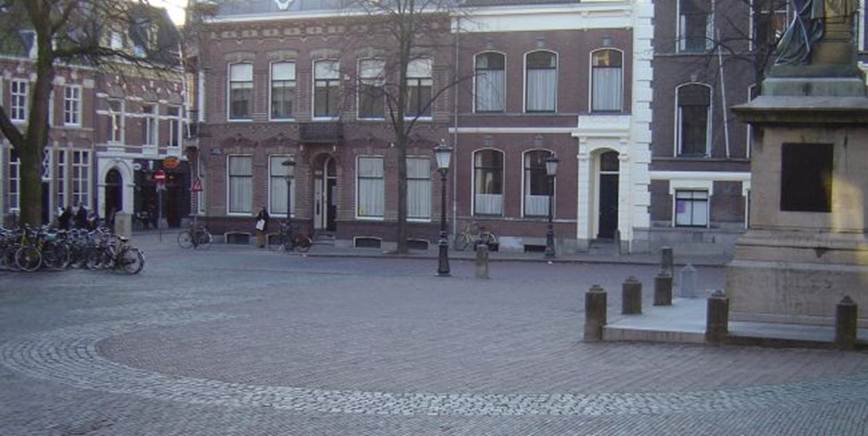
The choir of the
Salvatorcathedral is visible in the pavement.
The place is
disturbed by a row of houses (background) and
a monument of
some nobility (right).
The main axis of this
cathedral was clearly and powerful measurable.
It will be interesting to know
whether the families in these houses
have been influenced by the
heavy Ley Lines and the main axis
going through their houses.
Did the energy help them or
did the energy bring disaster?
Also at this place was the
veneration of the Lady in the Cellar during
many centuries with many
miracles known at the time.
The cellars are still there
beneath the pavement.
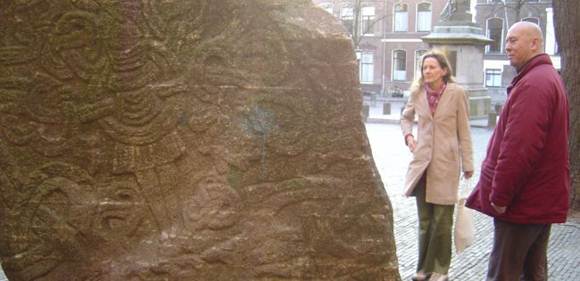
On the Domplein is standing a
duplicate of a famous ancient
rune-stone from Denmark since
1936AD.
Although runes as holy symbols
have a power on their own,
the duplicate of the Danish
runestone missed
the power we expected.
Very likely the stone is
standing wrongly oriented and on the wrong ley-line.
Also it is used often to piss
against by visitors of the city.
The Ley Line Group suggests a
better orientation of the replica
on a better place, which will
start the powerful healing energy of the runes.
Potentially the influence of
this stone could be very interesting.
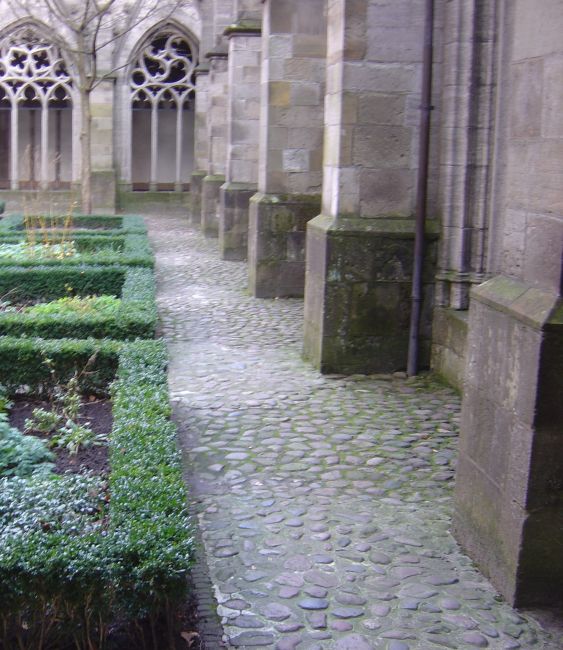
The ancient gallery next to
the Domplein is only partly ancient.
Measurements were indicating
that one side was newly-built
in the 19th century
(neo-Gothic).
The old part was interesting, because
the main axis of the Salvatorcathedral
is making a resonance in the
ancient part of this old gallery.
The wall shown on the picture
is almost vibrating of the powerful
Ley-line axis of the
Salvatorchurch.
The peace treaty of Utrecht was
signed here on this place,
but surely other significant
things must have happened here.
Powerful energies are waiting
here to aim at some positive achievement.
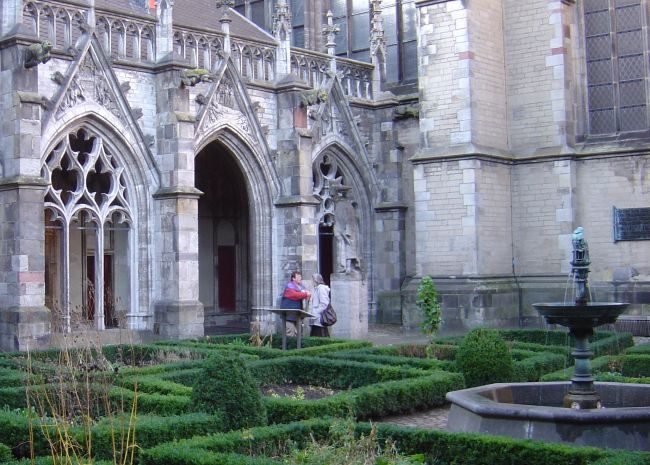
Some members of the Group
feeling-in whether the other side of the gallery was
energized or special.
The Group did not find special
energies here.
Significant were though the
number associations in the whole construction
with 3 and 4, with 6 and 7.
The message could be the unity
of female and male aspects of divinity.
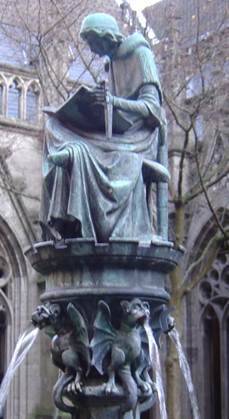
The neo-gothic writer monk is
seated upon four water dragons.
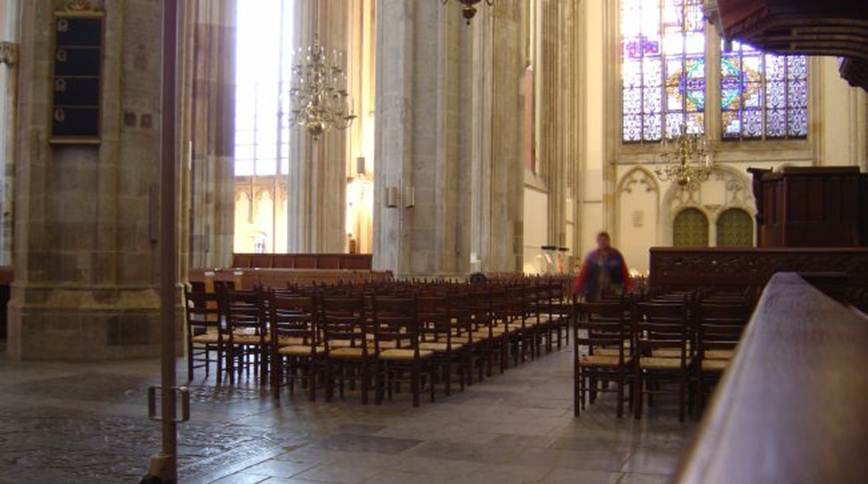
Inside the
Domchurch we were asked to leave the building
for employing
non-Christian activities such as measuring Ley-lines.
Nevertheless we found a
powerful main axis 7.6 in line with the Domtower
and in the middle of the
church
with six vortex point on the
main axis.
Remarkable was the presence of
a second main axis to the South.
The second main axis could
very well be in line with the West-East axis of the castellum.
In the transept stood a
perpendicular 7.6 line as was to be expected.
Remnants of the Roman temple
were measurable, but not the exact place.
The vision feelings gave some results,
like an earth-bound feeling on
the 7.6 line instead of a upward inclination.
The pillars of the cathedral
were connected with local 8.0 points,
which could explain why this
part of the cathedral was not blown away.
The front part of the
cathedral was blown away in 1674AD.
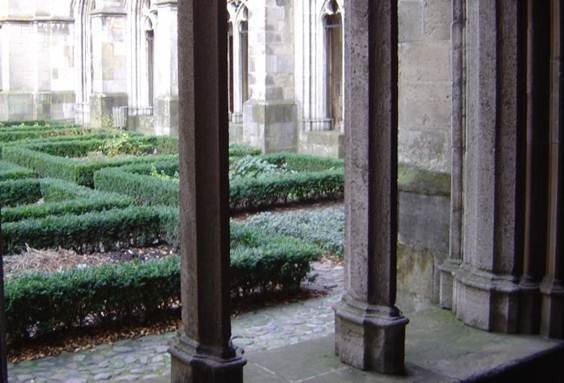
Another view of the old part
of the gallery.
What we see in the picture is really
ancient
and vibrating with the main
axis of the vanished Salvatorcathedral.
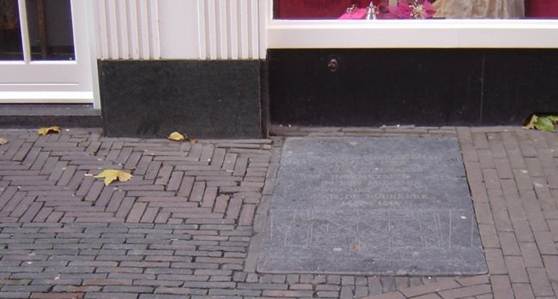
The Group felt a longing to
investigate the gravestone
of sister Bertken in the
Choirstreet,
but somehow it deed not feel
good at the time,
so this will be done another
visit.
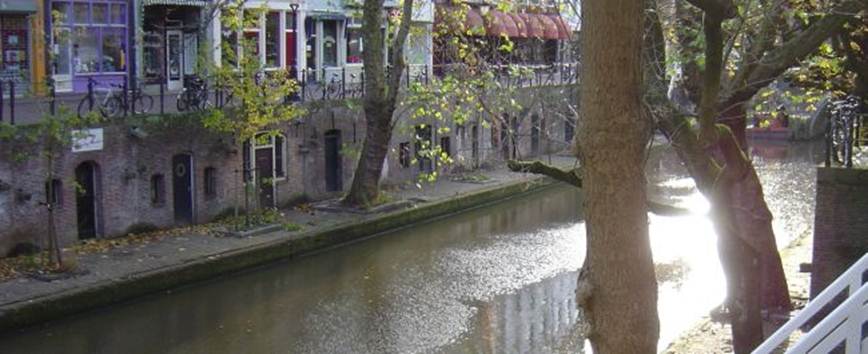
To bring together all the
results of all measurements we had
a drink on one of the nice
canals of Utrecht.

You may e-mail:


Updated August 01, 2012
Everything on this website:
Copyright©2002-2012 by Robert and Susan